Thursday, 25 June 2026

Fugitive Emissions Compliance and Bellows Seal Valves: What ISO 15848 Really Means for Your Plant

Fugitive emissions from industrial valves are no longer just an environmental concern — they are a regulatory and financial liability. For plant managers, project engineers, and procurement teams in the oil & gas, petrochemical, and chemical sectors, selecting the right valve technology directly affects compliance status, permit renewals, and ESG reporting.

Bellows seal valves have emerged as one of the most reliable solutions for controlling fugitive emissions at the source. But to make an informed procurement decision, it is important to understand what international standards such as ISO 15848 actually demand — and how bellows seal valves meet those demands.

What Are Fugitive Emissions in Industrial Valves?

Fugitive emissions refer to the unintentional release of gases or vapors from process equipment, including valves, pumps, and flanged joints. In valves specifically, the primary leak path is through the stem packing — the sealing element that allows the stem to move while preventing process fluid from escaping.

Even minor valve stem leakage of volatile organic compounds (VOCs), hydrogen sulfide, or other toxic gases can breach emission thresholds set by regulators such as the Central Pollution Control Board (CPCB) in India, the EPA in the United States, and equivalent bodies in the EU and GCC countries.

ISO 15848: The International Standard for Valve Fugitive Emissions

ISO 15848-1 and ISO 15848-2 are the internationally recognized standards governing fugitive emission testing for industrial valves. ISO 15848-1 defines the classification system and test methods, while ISO 15848-2 applies to production acceptance testing.

The standard classifies valves into three emission classes — Class A (tightest), Class B, and Class C — based on allowable leak rates measured in milligrams per second per millimeter of stem diameter. Class A valves must achieve leakage levels below 50 mg/s·m, making them suitable for the most stringent applications involving carcinogenic, highly toxic, or high-vapour-pressure media.

ISO 15848-1 also specifies mechanical endurance ratings: CO1 (less than 500 cycles), CO2 (up to 20,000 cycles), and CO4 (up to 200,000 cycles). For control valves in continuous service, CO4 certification ensures that the valve maintains its sealing performance across its entire operating life.

How Bellows Seal Valves Achieve ISO 15848 Compliance

Unlike conventional valves that rely on stem packing alone, bellows seal valves incorporate a welded metal bellows that acts as a primary seal around the valve stem. The packing arrangement — when present — functions only as a secondary safety seal. This dual-barrier design eliminates the primary leak path responsible for most fugitive emissions in packing-reliant valves.

The welded bellows is typically fabricated from austenitic stainless steel or alloys such as Inconel or Hastelloy, depending on the fluid compatibility requirements. The absence of dynamic sealing contact between the stem and the primary seal means there is no wear-driven degradation of sealing performance over time — a key advantage over PTFE or graphite packing systems.

When tested per ISO 15848-1, high-quality bellows seal globe valves consistently achieve Class A leakage classification with CO4 endurance ratings. This makes them the preferred choice for applications involving chlorine, hydrogen, ammonia, sour gas, and other hazardous or environmentally sensitive media.

Compliance Implications for Indian Process Industries

For plants operating under the Environment Protection Act and the Hazardous Wastes Management Rules in India, demonstrating emission control through valve selection is increasingly scrutinized during inspections and environmental audits. Specifying ISO 15848-1-certified bellows seal valves as a standard for critical service lines — particularly those handling HAP (hazardous air pollutants) — provides documented, third-party validated evidence of emission control measures.

Beyond regulatory compliance, the operational benefits are measurable: reduced maintenance intervals, elimination of routine packing adjustments, and lower lifetime emissions that contribute directly to a plant's carbon accounting metrics.

Specifying Bellows Seal Valves for Fugitive Emissions Service

When specifying bellows seal valves for fugitive emissions compliance, procurement teams should request documentation of ISO 15848-1 test reports, confirm the bellows material is compatible with the process fluid, verify the endurance class matches the operational cycle frequency, and ensure the secondary packing is also rated for the application temperature and pressure.

Working with a manufacturer that conducts in-house helium leak testing aligned to ISO 15848-1 — rather than relying solely on type-testing certificates — provides an additional layer of quality assurance for each valve supplied.

Fugitive emissions compliance is increasingly a specification standard rather than an optional upgrade. Bellows seal valves represent a proven, engineering-backed path to meeting those standards without compromising on process performance.

Friday, 20 February 2026

Bellow Seal Valve: Leak Proof Solution for Critical Industrial Applications

 In industries where leakage can cause safety hazards, environmental damage, or product contamination, choosing the right valve is crucial. A bellow seal valve is specifically designed to eliminate stem leakage and ensure complete sealing integrity. These valves are widely used in chemical plants, oil and gas refineries, power generation, and steam systems.

This article explores the working principle, advantages, applications, and selection criteria of bellow seal valves.

What Is a Bellow Seal Valve

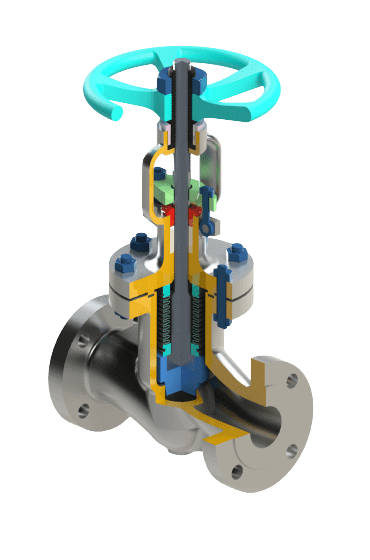
A bellow seal valve is a type of industrial valve that uses a metallic bellows element to create a hermetic seal between the valve stem and the body. Unlike conventional valves that rely only on packing to prevent leakage, bellow seal valves incorporate a welded metal bellows that prevents any fluid from escaping into the atmosphere.

This makes them ideal for handling hazardous, toxic, high temperature, or high pressure fluids.

How a Bellow Seal Valve Works

The key component of a bellow seal valve is the metal bellows, usually made from stainless steel or special alloys.

Working mechanism:

  • The valve stem is connected to a flexible metallic bellows

  • The bellows is welded to both the valve stem and bonnet

  • When the valve opens or closes, the bellows expands or compresses

  • The welded construction prevents leakage along the stem

In addition to the bellows, most designs include secondary packing as a backup safety measure.

Key Advantages of Bellow Seal Valves

1. Zero Stem Leakage

The welded bellows eliminate fugitive emissions. This is especially important in industries handling toxic gases or volatile fluids.

2. Environmental Protection

Bellow seal valves help industries comply with strict emission control regulations by preventing harmful leaks.

3. Increased Safety

In applications involving steam, hot oil, or hazardous chemicals, preventing leakage reduces risk to workers and equipment.

4. Low Maintenance

Since stem packing wear is minimized, maintenance frequency is reduced compared to conventional valves.

5. Long Service Life

High quality metallic bellows are designed to withstand repeated expansion and compression cycles without failure.

Common Types of Bellow Seal Valves

Bellow Seal Globe Valve

Most widely used type. Ideal for throttling and flow regulation.

Bellow Seal Gate Valve

Suitable for full open or full close applications with minimal pressure drop.

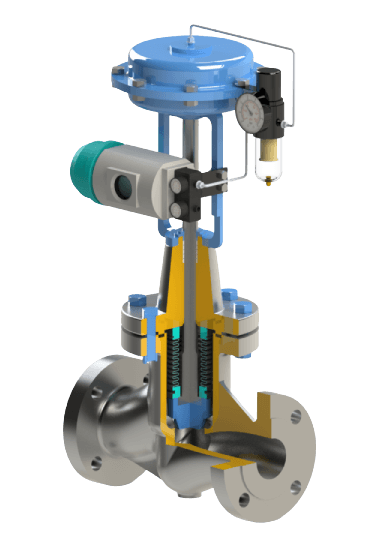
Bellow Seal Control Valve

Used in precise flow control systems where leakage must be avoided.

Industrial Applications

Oil and Gas Industry

Used in refinery units and hydrocarbon processing lines where fugitive emissions must be minimized.

Chemical Industry

Handles corrosive and toxic fluids such as acids, solvents, and specialty chemicals.

Power Plants

Commonly installed in high pressure and high temperature steam lines.

Pharmaceutical Industry

Ensures contamination free processing in sensitive production environments.

Thermal Oil Systems

Prevents leakage of hot oil under high temperature conditions.

Materials Used in Bellow Seal Valves

Material selection depends on the application:

  • Carbon steel for general industrial use

  • Stainless steel for corrosion resistance

  • Alloy steel for high temperature and pressure

  • Special alloys for aggressive chemical environments

The bellows itself is typically made from stainless steel or Inconel for enhanced durability.

Selection Criteria

When selecting a bellow seal valve, consider:

  • Operating temperature and pressure

  • Type of fluid being handled

  • Corrosion resistance requirements

  • Applicable industry standards

  • Maintenance accessibility

  • Required valve type such as globe or gate

Proper selection ensures reliability and regulatory compliance.

Bellow Seal Valve vs Conventional Packed Valve

Feature comparison:

Stem Leakage
Bellow seal valve provides zero leakage
Conventional valve may develop packing leaks over time

Maintenance
Bellow seal valve requires less frequent packing adjustment
Conventional valve needs regular packing maintenance

Environmental Compliance
Bellow seal valve is suitable for emission controlled systems
Conventional valve may not meet strict emission standards

Market Demand and Growth Potential

Growing environmental regulations and safety standards are increasing the demand for bellow seal valves. Industries are focusing on reducing fugitive emissions and improving operational safety.

Key growth drivers include:

  • Stricter environmental compliance

  • Expansion of chemical processing plants

  • Increasing focus on workplace safety

  • Rising demand for emission free systems

Manufacturers offering certified and high performance bellow seal valves are well positioned in the global industrial valve market.

A bellow seal valve is a critical solution for industries where leakage prevention is essential. By eliminating stem leakage and enhancing safety, these valves offer superior performance compared to conventional packed valves.

As industries move toward stricter environmental and safety regulations, the adoption of bellow seal valves will continue to grow. Investing in high quality, certified bellow seal valves ensures long term reliability, regulatory compliance, and operational excellence.

Featured Post

Fugitive Emissions Compliance and Bellows Seal Valves: What ISO 15848 Really Means for Your Plant

Fugitive emissions from industrial valves are no longer just an environmental concern — they are a regulatory and financial liability. For p...